Deep in the lush forests of Kibale National Park, something extraordinary—and unsettling—is unfolding. A group of chimpanzees, once united, has split into rival factions and descended into a prolonged, deadly conflict. For travelers, researchers, and nature lovers, this isn’t just a story about wildlife—it’s a rare, raw glimpse into the origins of behavior that mirrors our own.
Welcome to the hidden reality of chimpanzee life—far beyond the playful scenes you may have seen in Chimp Empire.
A Community Torn Apart
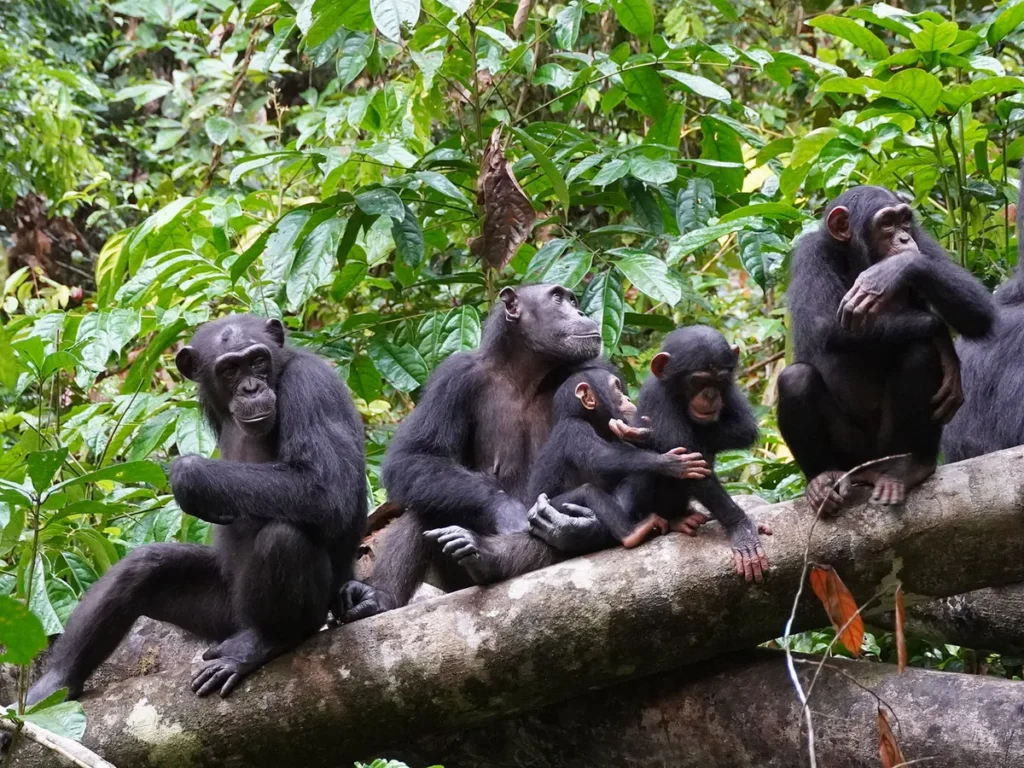
For decades, scientists have closely observed the Ngogo chimpanzee community in Kibale. This is one of the largest known groups of wild chimpanzees—over 200 individuals living, hunting, and socializing together.
At the heart of their society were strong bonds:
- Males formed alliances and patrolled territories together
- Families interacted freely across clusters
- Social grooming reinforced trust and unity
But around 2015, everything changed.
What started as tension between subgroups—especially the Western and Central clusters—quickly escalated into violent clashes. Today, the conflict has led to dozens of deaths, including vulnerable infants. It’s the most sustained and lethal chimpanzee conflict ever recorded.
The First “Chimp Civil War”?
This isn’t the first time scientists have seen chimpanzees fight. Back in the 1970s, Jane Goodall documented similar aggression in Tanzania. But many believed that case was influenced by human interference.
The Ngogo conflict proves otherwise.
Here in Uganda, untouched forest conditions have revealed that chimpanzees are capable of:
- Forming alliances
- Splitting into factions
- Carrying out coordinated, repeated attacks
In short—something very close to war.
What Caused It?
Surprisingly, no one knows for sure.
Researchers believe the tipping point may have been the loss of key male chimpanzees—individuals who acted as “social bridges” between groups. Without them, relationships weakened, trust eroded, and minor tensions spiraled into violence.
It’s a powerful reminder:
Sometimes, conflict doesn’t need a big reason—just broken connections.
Why This Matters (Beyond the Forest)
Chimpanzees share a common ancestor with humans from about 6 million years ago. That makes their behavior incredibly important for understanding our own.
What’s striking is this:
- There’s no ideology behind the conflict
- No language, politics, or culture driving it
- Just shifting relationships and social breakdown
It suggests that the roots of human conflict may be far deeper—and simpler—than we think.
Experience It for Yourself
At Chimp Safaris, we believe travel should do more than show you places—it should open your eyes.
A visit to Kibale isn’t just about seeing chimpanzees. It’s about:
- Witnessing complex social lives up close
- Understanding our evolutionary cousins
- Experiencing one of Uganda’s richest ecosystems
Whether you’re trekking through dense forest or listening to distant chimp calls echo through the canopy, every moment brings you closer to a deeper story.